
 8 Min Read
 08/21/2026
Storm Damaged Roof: 12 Warning Signs You Shouldn’t Ignore
Not every storm leaves an obvious mark. A storm damaged roof can look mostly fine from the ground while hiding a handful of smaller problems that add up to a much bigger issue down the line. Knowing what to look for after high winds, hail damage, or heavy rain can be the difference between a quick storm damage roof repair and full-blown water leaks after the next major storm.
Here’s a quick overview of what we’ll cover:
- The exterior signs that show up on the roof itself
- The interior signs that point to damage already in progress
- Why some of the most serious warning signs are also the easiest to miss
- What tends to happen if these signs go unaddressed
If a recent storm has you second-guessing your roof, a closer look at the roof itself is what actually settles the question.
Why Warning Signs Are Easy to Miss
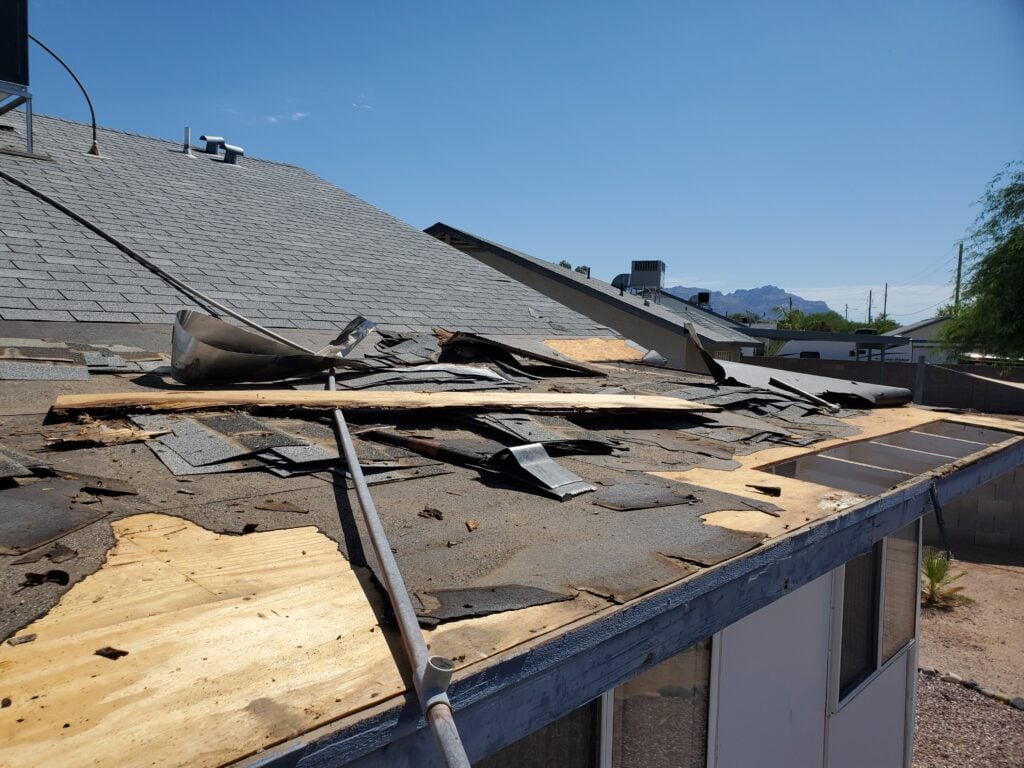
Storm damage doesn’t always announce itself. A few missing granules, a slightly bent vent, or a hairline crack in a shingle can look like nothing from ground level, but each one is a potential entry point for water. Homeowners tend to notice visible damage right away, like a tree limb through the roof, but the quieter signs are often the ones that lead to the most expensive repairs, simply because they go unnoticed the longest. Annual roof inspections help catch these quieter signs before they turn into something worse, and a local roofing contractor familiar with the area’s weather patterns can often spot them faster than an untrained eye.
12 Warning Signs of a Storm Damaged Roof
Here’s what to look for after any severe storms, whether they brought wind damage, hail, or heavy, wind-driven rain.
1. Missing or Displaced Shingles
Shingles that are gone entirely, or visibly shifted out of place, are the most obvious sign something happened during the storm.
- Scan the roofline from the ground for bare patches
- Check the yard and gutters for roof shingles that may have blown off
- Note the general area of the roof where shingles appear to be missing
2. Granule Loss in Gutters
A gritty, sand-like buildup in your gutters after a storm usually means the shingle surface took a beating.
- Check gutters and downspouts after any hail or wind event
- Compare buildup to what you’d normally see after routine wear
- Note whether the loss is spread out or concentrated in one area
3. Dented or Damaged Gutters and Downspouts
Hail and flying debris often hit gutters before anything else during roof storm damage events, making them a useful early indicator of storm severity.
- Look for small dents or dings along the gutter line
- Check downspouts for bends or disconnections
- Treat gutter damage as a cue to check the roof more closely
4. Cracked or Dented Roof Vents and Flashing
Roof vents and flashing are made of thinner roofing materials than asphalt shingles, so they tend to show impact damage first at these roof penetrations.
- Check plumbing and exhaust vents for dents or cracks
- Look at flashing around chimneys and skylights for similar damage
- Treat any visible dents as a signal that the roof is vulnerable at that point and the surrounding shingles need a check too
5. Bruised or Dented Shingles
Hail impact often leaves shingles with soft, bruised spots rather than obvious holes, which makes this sign easy to miss without a close inspection.
- Look for dark spots or soft indentations on the shingle surface
- Press gently on suspected areas, since bruised spots often feel soft
- Note the size and spacing of any impact marks
6. Curling, Cracking, or Blistering Shingles
Storm stress, combined with sun exposure afterward, can cause shingles to curl, crack, or blister earlier than they normally would.
- Look for shingle edges that appear to be lifting or curling
- Check for visible cracks running across the shingle surface
- Note any raised, bubble-like blisters on the shingle
7. Sagging Roofline or Soft Spots
A dip or soft spot anywhere on the roof usually means water has already reached the roof deck.
- Look for uneven spots along the ridge or eaves from a distance
- Note any give or sponginess if you’re walking the roof during an inspection
- Treat this sign as a priority, since it often means damage is already advanced
8. Debris Embedded in the Roof
Branches from overhanging tree limbs, shingle granules from neighboring roofs, or other falling debris caught on your roof are worth investigating, not just clearing away.
- Check for debris lodged in valleys or against vents
- Look underneath cleared debris for damaged shingles, cracks, or punctures
- Note any dents left behind by heavier debris
9. Water Stains on Ceilings or Walls
Discoloration on an interior ceiling or wall is one of the clearest signs that storm damage has already let water inside.
- Check ceilings, especially in upper-floor rooms and closets
- Look for yellow or brown staining that wasn’t there before
- Note the location, since it often lines up with a source on the roof above
10. Musty Odors or Visible Mold
A new musty smell, or any visible mold growth, points to moisture that’s been sitting for a while.
- Pay attention to any new odors in the attic or upper floors
- Check for visible mold on insulation, wood, or drywall
- Treat this sign as urgent, since moisture has typically been present for some time
11. Daylight Visible Through the Attic Roof Boards
If you can see daylight coming through the roof boards from inside the attic, that’s a direct sign of a gap or hole that needs immediate attention.
- Check the attic during daylight hours with the lights off
- Look specifically near vents, chimneys, and roof edges
- Treat any visible light as an urgent repair, not a wait-and-see issue
12. Rising Energy Bills
An unexplained increase in heating or cooling costs can point to storm damage that’s compromised your roof’s insulation or ventilation.
- Compare recent energy bills to the same period in prior years
- Consider a roof and attic inspection if costs have risen without another clear cause
- Pair this sign with any other warning signs for a fuller picture
These same twelve signs generally apply whether your home has an asphalt shingle roof or metal roofs, though metal panels tend to show dents more clearly while shingles are more prone to granule loss and curling. Homeowners in colder climates should also watch for ice dams during winter storms, since trapped water at the roof’s edge can cause damage that mimics several of the signs above.
What Happens If These Signs Go Ignored
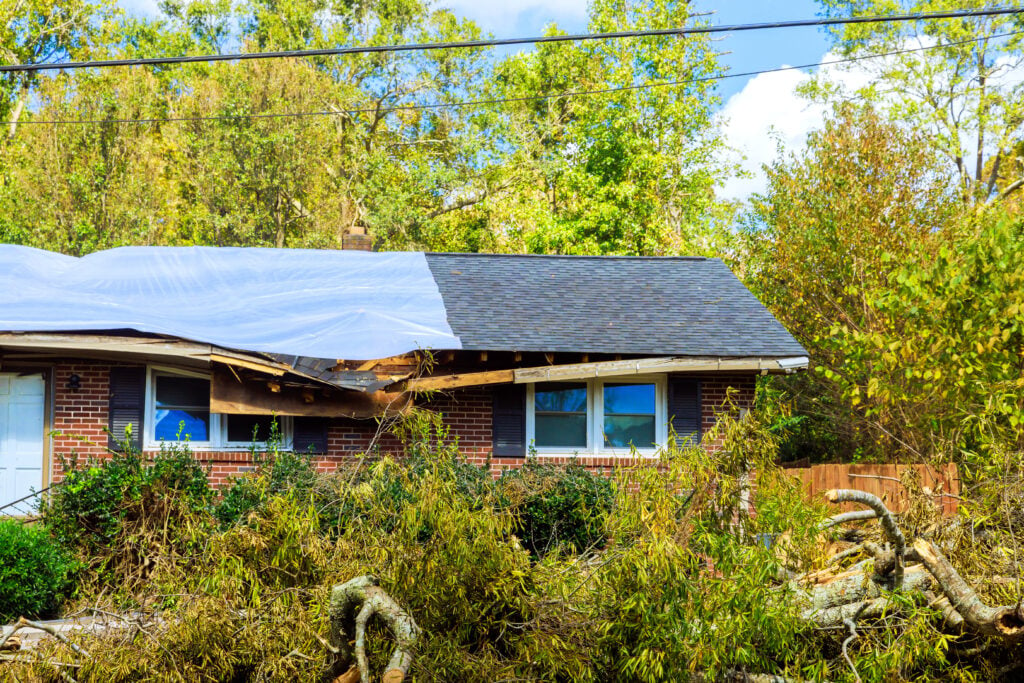
Small storm damage rarely stays small. A missing shingle or a cracked vent left unaddressed gives water a reliable path into the roof deck, attic, and eventually the interior of the home. According to the U.S. Environmental Protection Agency, water-damaged areas and items should be dried within 24 to 48 hours to prevent mold growth, which means a slow leak from an ignored warning sign after severe weather can turn into a mold problem faster than most homeowners expect. Once mold or structural rot sets into the roof structure, the repair scope, and the cost, grows considerably.
What starts as a minor, ignorable sign can escalate into severe damage that compromises the roof structure itself, not just the surface materials. A roof that’s left exposed to further damage after one storm is also more vulnerable to the next one, which is why a targeted roof replacement, or in more serious cases a full roof replacement, sometimes becomes the more practical choice over repeated repairs.
Storm Damaged Roofs: Questions Homeowners Ask Most
Here are straightforward answers to the questions we hear most often after a storm.
How soon after a storm should I check my roof?
As soon as it’s safe to do so, ideally within a day or two. Wind, hail, and debris damage tend to get worse with each additional storm, so an early check helps catch problems before the next round of weather.
Can I spot storm damage from the ground, or do I need to get on the roof?
Many signs, like missing shingles, sagging spots, and debris, are visible from the ground with a good pair of binoculars. Signs like hail bruising and granule loss are harder to catch without a closer inspection, which is where a professional often adds real value.
Is storm damage always covered by insurance?
In many cases, yes, since wind and hail are commonly covered perils under standard homeowners insurance provider policies. Insurance coverage specifics vary by carrier and policy, so it’s worth reviewing your policy or asking your agent directly. The claims process for storm damage tends to move faster when the documentation is thorough from the start, and understanding the insurance claim process ahead of time helps you know what to expect.
What if I don’t see any of these signs after a storm?
That’s a good outcome, and it’s still worth a periodic roof inspection anyway, since some damage takes time to show clear signs. A clean inspection from a professional roofing contractor also gives you a documented baseline in case a future storm causes damage that’s harder to distinguish from pre-existing wear.
Not Sure If Your Roof Took a Hit?
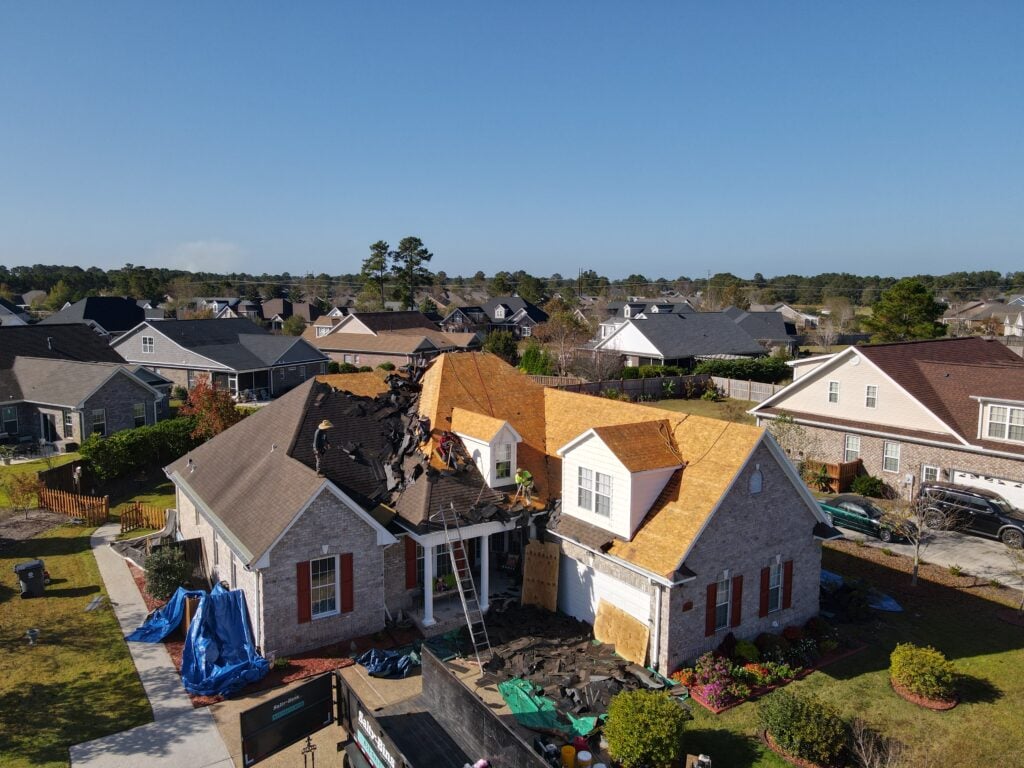
If a recent storm has you wondering whether any of these signs apply to your home, Summit Roofing can take the guesswork out of it. We also provide insurance claim support if you need documentation to back up a claim.
Have Summit Roofing take a look with a free, no-obligation inspection.